

If you’re taking on the marathon distance for the first time, it can seem like a daunting challenge.
However, with the right training plan and enough dedication and motivation to put in the work, come race day you’ll be feeling confident you can get yourself to that finish line.
But taking on the marathon isn’t just about clocking up your miles, as there’s a few other things to consider as well.
Here’s 26 tips to have you feeling prepared and ready to take on the 26.2-mile distance:
1 Set your goal: When it comes to taking on a marathon, it’s important to set an A and a B goal. You’re a goal could be something like a certain time and your B goal is something to aim for if later down the line you’re a goal isn’t achievable such as simply wanting to finish feeling strong.
2 Plan your training: Following a structured training plan will help you feel more confident in achieving your goals and limit the risk of injury. Use the code NEWPORT26 to get two weeks free and 20% off an annual Coopah plan – a digital personalised training programme.
3 Put your best foot forward: Get properly fitted for suitable running shoes and invest in some good quality socks that will help keep your feet dry, comfortable and blister free. It’s important not to wear brand new shoes on race day, instead break them in during your training for a comfortable run.
4 Don’t forget to strength train: While it’s important to get in the miles, it’s just as important to build up your strength to support your body through all your training and during race day. Not only will this help your body become more resilient, but it will also help prevent injury.
5 Practise your fuelling and hydration: The marathon will be incredibly taxing on your body so it’s important you’re giving it enough energy to get you to the end. Practise your fuelling and hydration strategy during your training runs to find out what works best for you and your stomach. Regular sips of water is much better than chugging water every now and then and taking on energy about every 30-40 minutes (even when you don’t feel like it) will help to prevent you from hitting the wall. At the Newport Marathon Festival there will be Brecon Carreg water and High5 nutrition around the course, so it’s a good idea to practise with these products if you’re planning to use them on race day.
6 Prioritise rest: With all this vigorous training you also need to allow your body time to recover and regenerate muscle strength, especially after hard workouts. Add a rest day into your weekly training and try to focus on getting good, quality sleep each night.
7 Know the course: Study the course map ahead of time and know where the aid stations, laps and turning points are – even better if you can get out and practise sections of the route and running at the same time as the race. The good thing to know is that the ABP Newport Marathon is flat and fast with many runners claiming a PB on the course.
8 Do speed work (optional but helpful): Incorporate some faster running (like Yasso 800s or mile repeats) into your plan; this improves your running economy. You could even incorporate some fast miles into your longest training run to give you an extra boost come race day.
9 Test your fitness: Run a half marathon race about a month out as part of your training to test where you’re at with your fitness and mental toughness. You could also use it as a chance to run through what you’re planning to do race day morning – such as getting up at the same time and eating the same breakfast.
10 Take time to taper Reduce your running volume in the final weeks before the race to allow your body to reach optimal energy levels. Now is not the time to be cramming any extra miles in, as at this stage you’ll be doing more harm than good.
11 Stay calm: In the week leading up to your race try to reduce as many stressors as you can to keep yourself calm and relaxed. It’s natural you’ll be feeling nervous but know you’ve put in all the hard work and you’ve got this. While you may be reducing mileage on your taper, that also applies for other strenuous activities and exercises too.
12 Don’t try anything new: Stick to the shoes, gear, nutrition, and hydration plan that you practised in training. Make sure you’ve done some training in the kit you’ll be wearing so you’re aware of any areas that might cause chaffing or discomfort, and you can prepare for that accordingly with special creams or Vaseline.
13 Carb load: In the day or two before your race you’re going to want to slightly increase your carb intake to ensure your muscles are fully fuelled with glycogen. There’s no need to go crazy as you don’t want to feel heavy and sluggish. Instead aim for around 6-12g of carbs per KG of bodyweight and opt for foods like rice, potatoes, pasta and fruit juice.
14 Plan race day morning: Know exactly what you will eat for breakfast (2-3 hours before the start), when you will leave, and ensure your gear (bib, kit) is ready the night before.
15 Stick to what you know: Many people will come to you with last minute tips and advice but it’s important you stick to what you know and what you’ve been doing during your training. Unless you’ve already tried and tested their advice, don’t use your race as a chance to find out.
16 Use visualisation: Imagine what it feels like to cross that finish line, receiving your medal and the accomplishment that comes with taking on this epic distance. This will help to prepare you, boost your confidence and feel more positive when getting to the start line.
17 Warm up: This is something that is often skipped by runners, with many instead opting to use their first few miles to ease into their run. However, warming up your body for what it’s about to go through is really important in helping it prepare for exercise and avoiding any nasty injuries. A brisk walk and some dynamic stretches like leg swings, lunges and squats as well as heel flicks, calf raises and high knees should do the trick.
18 Pace yourself: Force yourself to hold back in the early miles. Many first-timers go out too fast and pay for it later. Instead, spend the first half of your race relaxed in your run and if you feel you have more to give, quicken your pace in the later stages of the race.
19 Dress for the weather: Check the forecast to know if you might need items like gloves, a buff or a rain jacket if the weather looks to be cold and wet – but don’t overdress. You will warm up quickly once you start running.
20 Listen to your body: Pay attention to how you feel. If something is tight, slow down or stretch. Take walk breaks if needed as pushing through these signals could lead to injury and you needing to pull out of the race.
21 Use mental strategies: Have a mantra ready for the tough moments in the last 10K. Another trick to help make the distance seem more manageable is by breaking the race down into smaller, more manageable segments, for example just two more parkruns to go as you’re nearing the end.
22 Make friends and use the crowd: Interact with fellow runners and write your name on your bib so spectators can cheer you on – the energy is a powerful boost in getting you around the course.
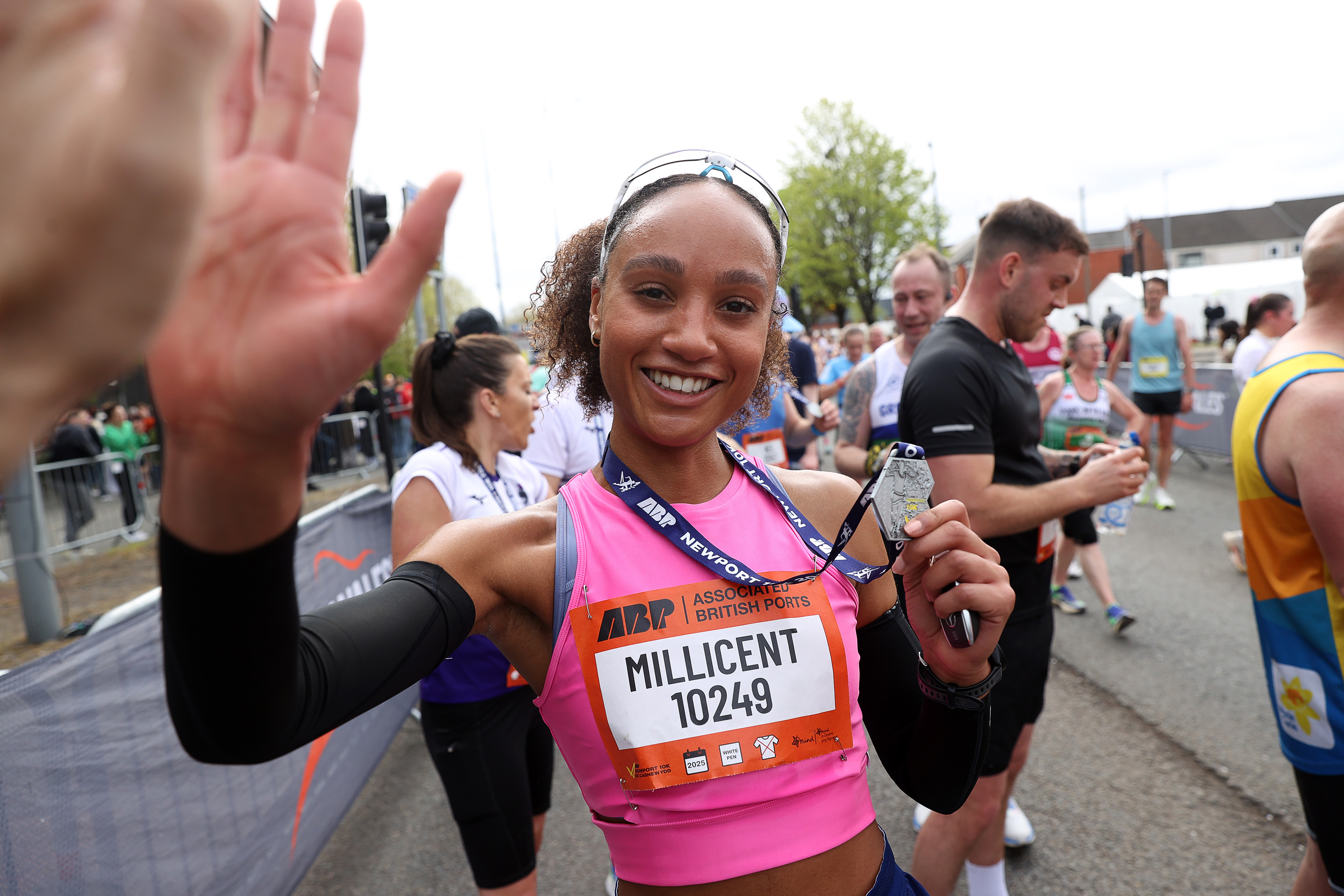
23 Stay positive and smile: A positive mindset makes the experience better and can even make you feel better in race photos.
24 Eat and hydrate within 30 minutes of finishing: Taking on some carbs and protein – something like a chocolate milkshake – within 30 minutes of finishing your race can help you recover faster and top up your energy levels that have become depleted during the race.
25 Walk around post-finish: You might be tired and feel like you’ve got nothing left to give, but don’t sit down immediately. Walking helps with recovery and will help prevent your muscles from seizing up.
26 Enjoy the experience: Remember that finishing your first marathon is an amazing, life-changing accomplishment. Most importantly make sure you have fun and enjoy every moment that takes you to the start line and into the race.